

The Stars We Do Not See
The once-in-a-lifetime exhibition I've been waiting for

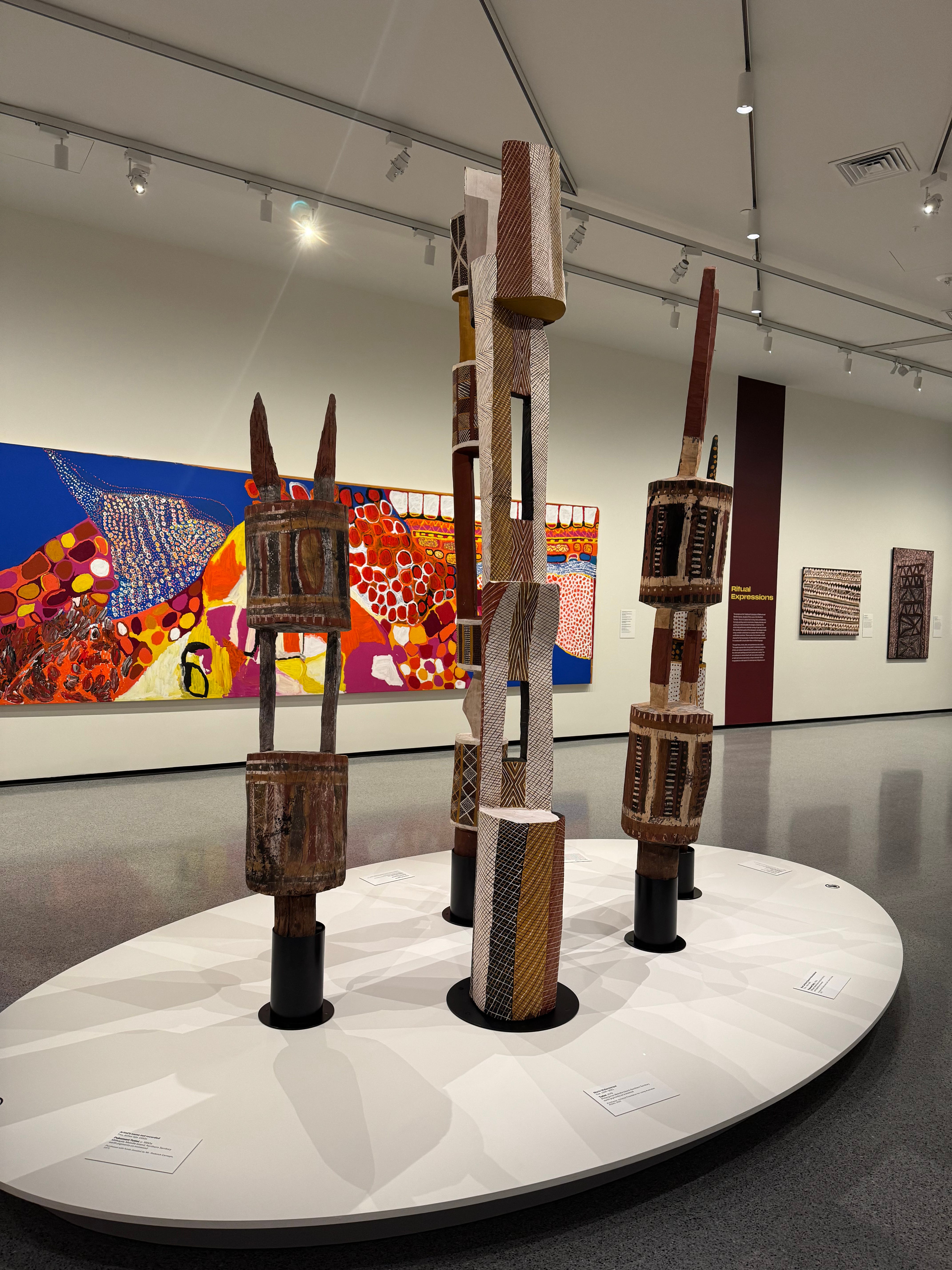
Torres Strait
I first heard of the Torres Strait when looking through a bookstore in Wellington, New Zealand around this time of year in 2017. I was in the cookbook section and found a self-published book titled Traditional Torres Strait Island Cooking by Ron Edwards (1988). I loved how the book came only with illustrations, like so many of the cookbooks I’ve fallen in love with and collected. The book was divided into sections on sweet & savory fruits, rice, coconuts, vegetables, turtle, sambals & sauces, meat and chicken dishes, and sea foods. I noticed a few familiar recipes including one called “adaboo meat” which was basically Filipino adobo. Another spelled “dinagwan” had a recipe requesting the blood of one pig and vinegar. I knew instantly it was diniguan.
In the introduction Edwards shares, “I began this book in 1959 when I first arrived in North Queensland from Victoria. It was completed in the early sixties and then sent off to most of the leading Australian publishing houses who all rejected it as being of little interest to the average city dwelling Australian. Unwanted and rejected it sat in the bottom of a cupboard for a more than twenty years and is now being published for the first time. Twenty years ago the average Australian did not really know that the Torres Strait Island even existed.”
Later on he writes, “These recipes originated with people who were concerned with getting the best out of the ingredients that are most plentiful along the tropical coastline of Northern Australia and the islands to the north. Many of the recipes are found all throughout the Pacific but, as would be expected, names very from place to place. A Fijian or a Tahitian would recognize most of the ingredients, but he would call them by different names.”
Like many islands in Oceania, “As the Torres Straits Islands became a melting pot for a number of different cultures their cooks adopted a little of each new regional style that seemed appropriate, changing them here and there to fit in with local tastes and available ingredients. Some recipes originated in the Pacific Islands to the east, others came from Indonesia and the Philippines, while a number were introduced by the Malayans, who have a long tradition of visiting Australian waters in search of beech-de-mer and pearl shell.”
This cookbook has left a profound impact on me, and so when the new National Gallery of Art exhibition that was originally expected to open in October (but was postponed due to the government shutdown and opened Saturday), announced it would include indigenous art from Australia and the Torres Strait, I knew I had to go.
Australia
I have a strong interest in Oceanic art and design and focus mainly on the Pacific Islands. My stronger connection to Austronesian identity is because of my family being from the Philippines and Aotearoa (New Zealand). However, I also have relatives in Australia. Many of my father’s relatives migrated to Australia after being raised in New Zealand. In 2005, after my first year living in New York City, I made plans to travel with my father to Australia for an entire month where my goal was to learn how to drive stick shift. At the last minute, my father bailed and I decided to go alone. I ended up staying with relatives in Noosa, Brisbane, Sydney, and Melbourne on both sides of my family. I was only meeting most of these relatives for the first time, and they were gracious enough to show me around and cook for me and let me stay in their homes. Although I have zero photos to share from that time, I was lucky to have a broad experience. Australia is a vast, breathtaking country with natural beauty I’ve never seen anywhere else in the world.
The Stars We Do Not See: Australian Indigenous Art
Marketed as a once-in-a lifetime exhibition, the Aboriginal and Torres Strait art exhibition, The Stars We Do Not See, is the largest exhibition ever shown outside Australia.
From a visual experience, I was floored. I immediately associate Indigenous art with an absence of color, but here there was so much expression through the use of colors. I immediately was pulled in by the storytelling, which I’m including some highlights. Some of the themes that connect with Native Hut are the following:
Theme One: Sacred Knowledge of the Land
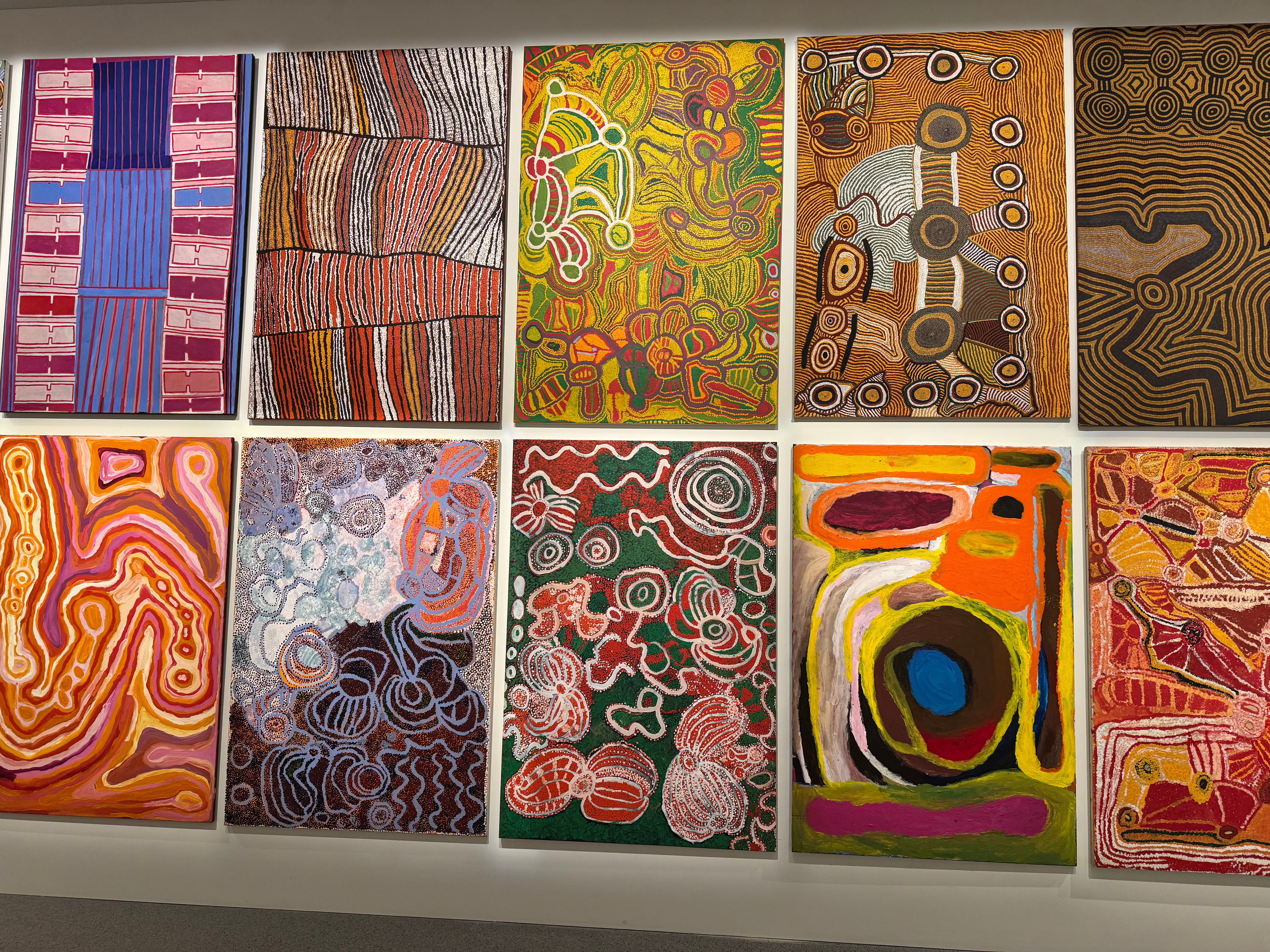
At exhibits like these, I’m always looking for curator’s notes on identity. They used the idea of Country as a way to define not just land, but origin and connection to the natural environment.
“Each of the groups that make up Indigenous Australia is unique; however, most share an understanding of the concept of Country. More than just the landscape, Country is the nexus of land, skies, waters, knowledge, bodies, and Law. It is understood to be closely tied to personal identity as a marker of one’s nation and Ancestral links to a place.
Dreaming refers to each Nation’s sacred Laws and narratives that recount the formation of people and Country. Also called Beforetimes and Everywhen, the Dreaming is the foundational era when Ancestral beings shaped the world, created life, and established the Laws that govern cultural, spiritual, and social practices. Sacred knowledge of Dreamings and Country is often shared only with members of a community and must remain secret to outsiders. The works of art in this exhibition are suitable for public viewing and none of the information described in the labels is culturally restricted. “
Often times native language serves as a way of protect sacred knowledge. Oral storytelling has also been a cultural practice found within indigenous cultures throughout the world. Earlier this year, I interviewed my friend Eva, who developed Niu Shack in Raiatea, known as a homeland for Polynesians. She shared a story of her great-grandfather who decided to work for settlers, in order to own the land that once was his.


Theme Two: Land and Sea References
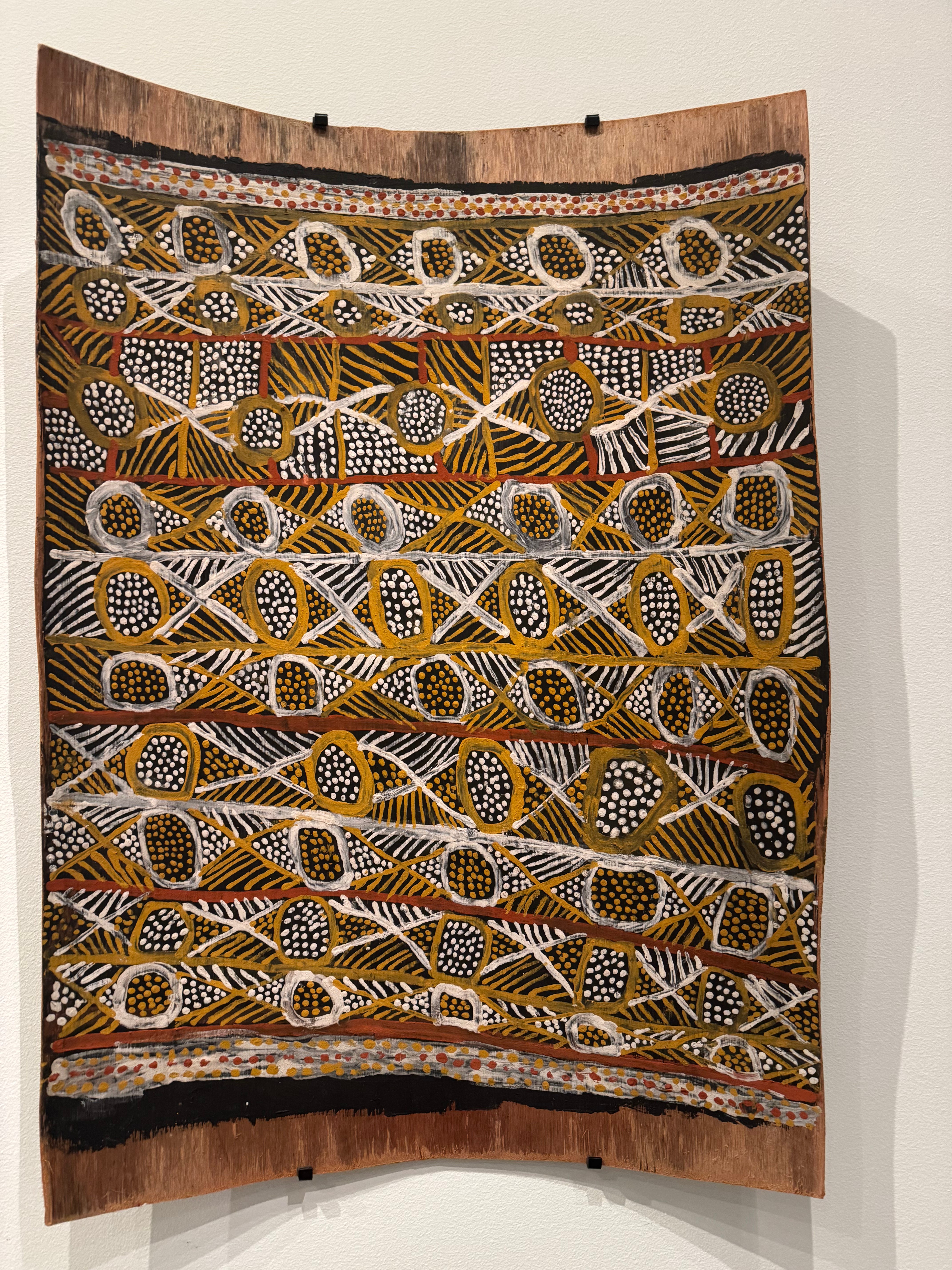
Show signage shared, “Indigenous coastal and island communities of Far North Queensland and the Torres Strait are among the most remote in Australia. Increased contact with Europeans in the 20th century eroded traditional ecosystems, food sources, languages, education, and rituals, at times leading to forced relocation away from Ancestral lands.”
In a recent past newsletter, I shared the work of Pacita Abad whose work has similar themes and techniques to this exhibition. Pacita not only represented the Philippines in her work, but also her travels throughout the world. I’m drawn to this theme of the land and sea being a part of an identity that only gets stronger as you lose access.


Theme Three: Beauty through Fiber and Adornment
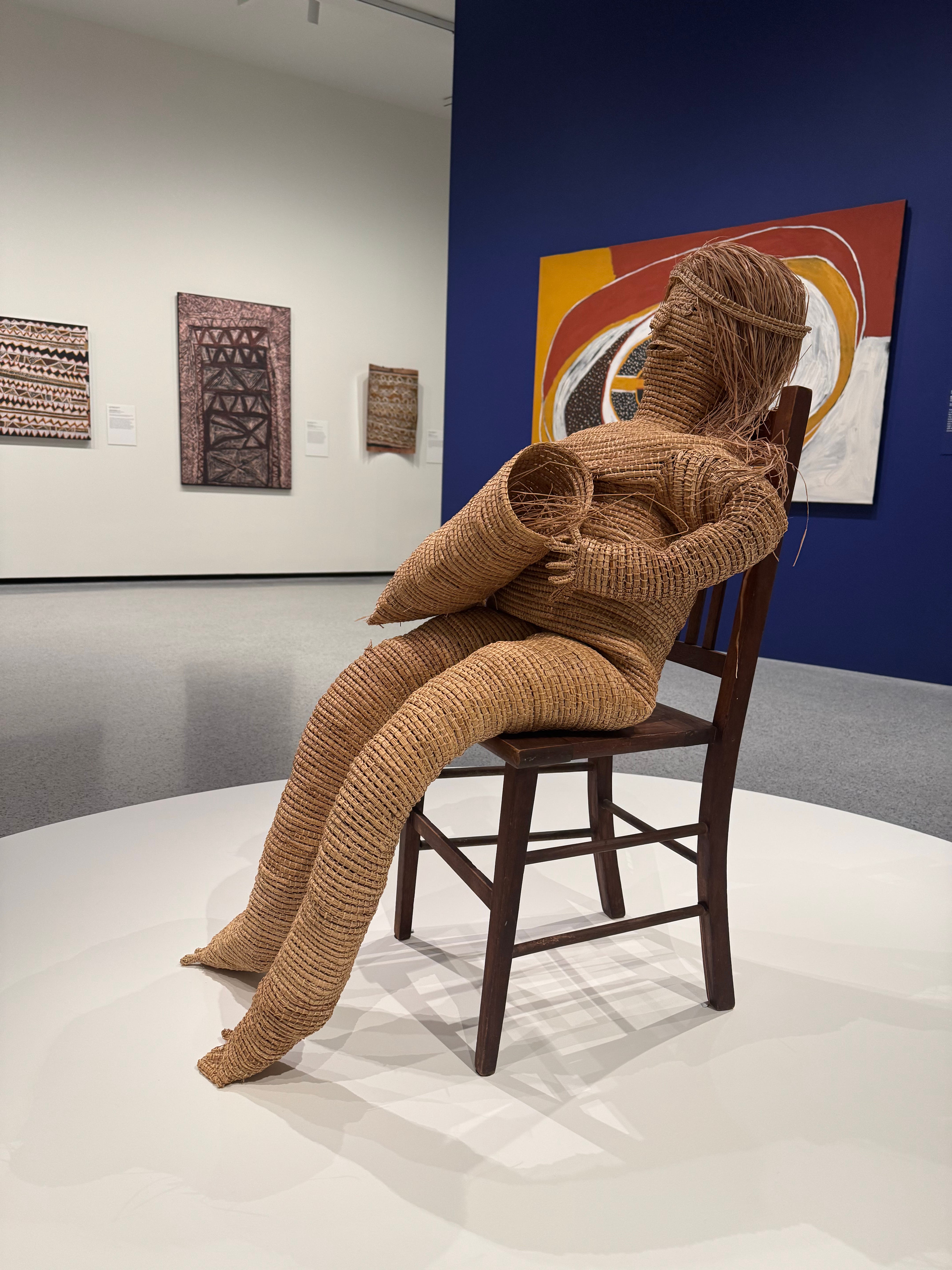
Signage in this section shares, “For millennia, women throughout Australia have collected local grasses, plants, and tree leaves—raw materials with both spiritual connections and utilitarian purposes. The natural materials are hand-spun into what is known as bush thing, which is dyed and then looped, knotted, coiled, or woven to create fiber baskets, fishing nets, string bags, mats, and other objects.”
I’ve previously shared a newsletter about the significance of the market bag, as a tool that ties cultural tradition with natural beauty.


The exhibition goes on to share, “Indigenous women also practice body adornment, often in connection with ceremonial dress. Using natural materials such as feathers, seeds and shells, jewelry brings body and Country together, reinforcing the inseparability of Country and self.”
Natural materials are used for body adornment throughout the Pacific Islands. While Chief of War was debuting on Apple tv I shared some of the ways traditional Native Hawaiian adornment was represented.


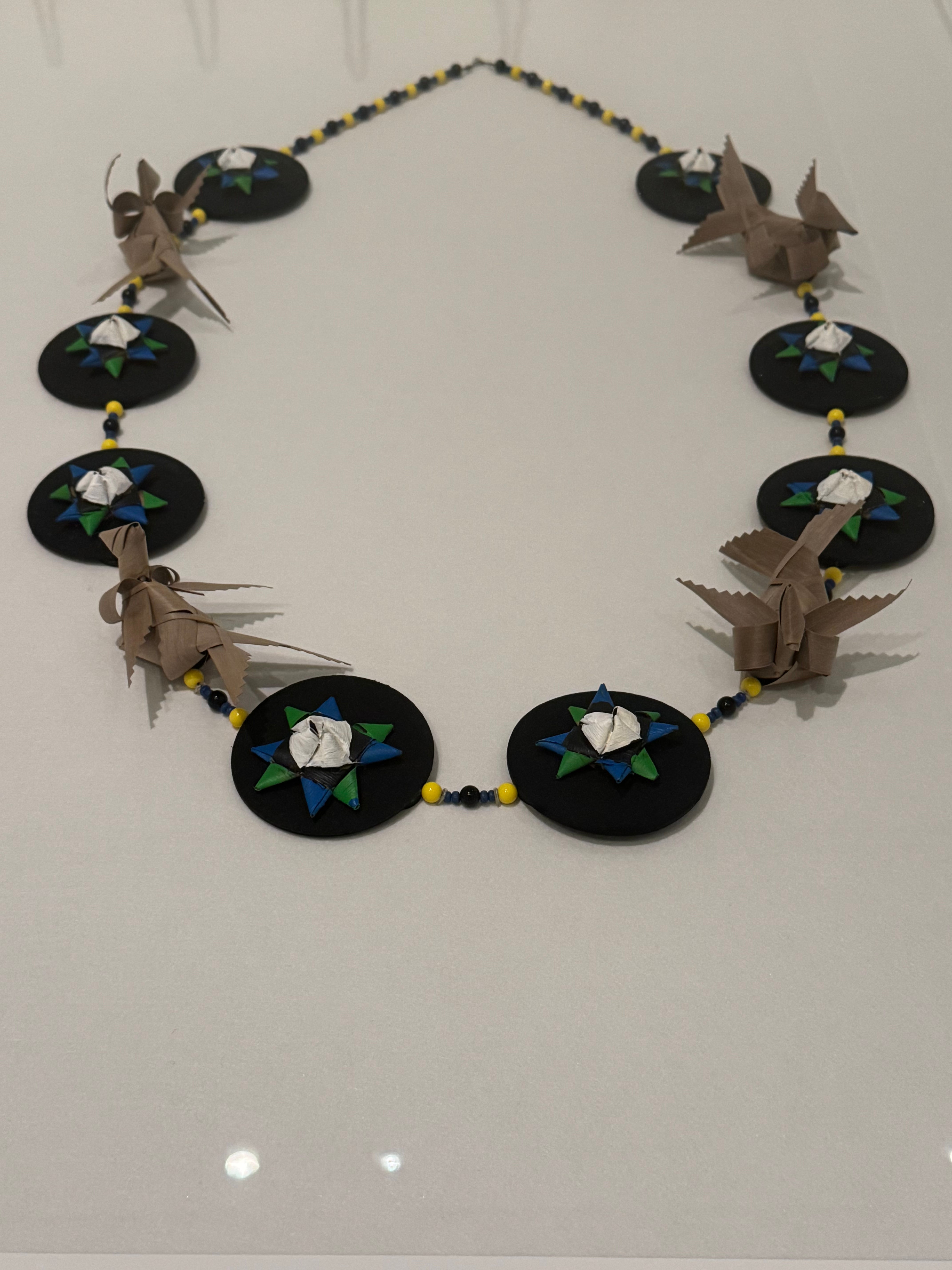
I could have documented everything at the exhibit, but wanted to end with the jewelry below, made in the Torres Strait. The more I research the visual arts and culture of Oceania and the Pacific Islands, the more similarities I find. However, I do love the fact that this necklace is unlike anything I’ve seen before. Creativity and personal expression, regardless of where we come from, is really a reflection of our own story.
Sumptuous! That word comes to mind reading this. Must go myself!