

Connected by Taro
In honor of Pacific Islander Heritage

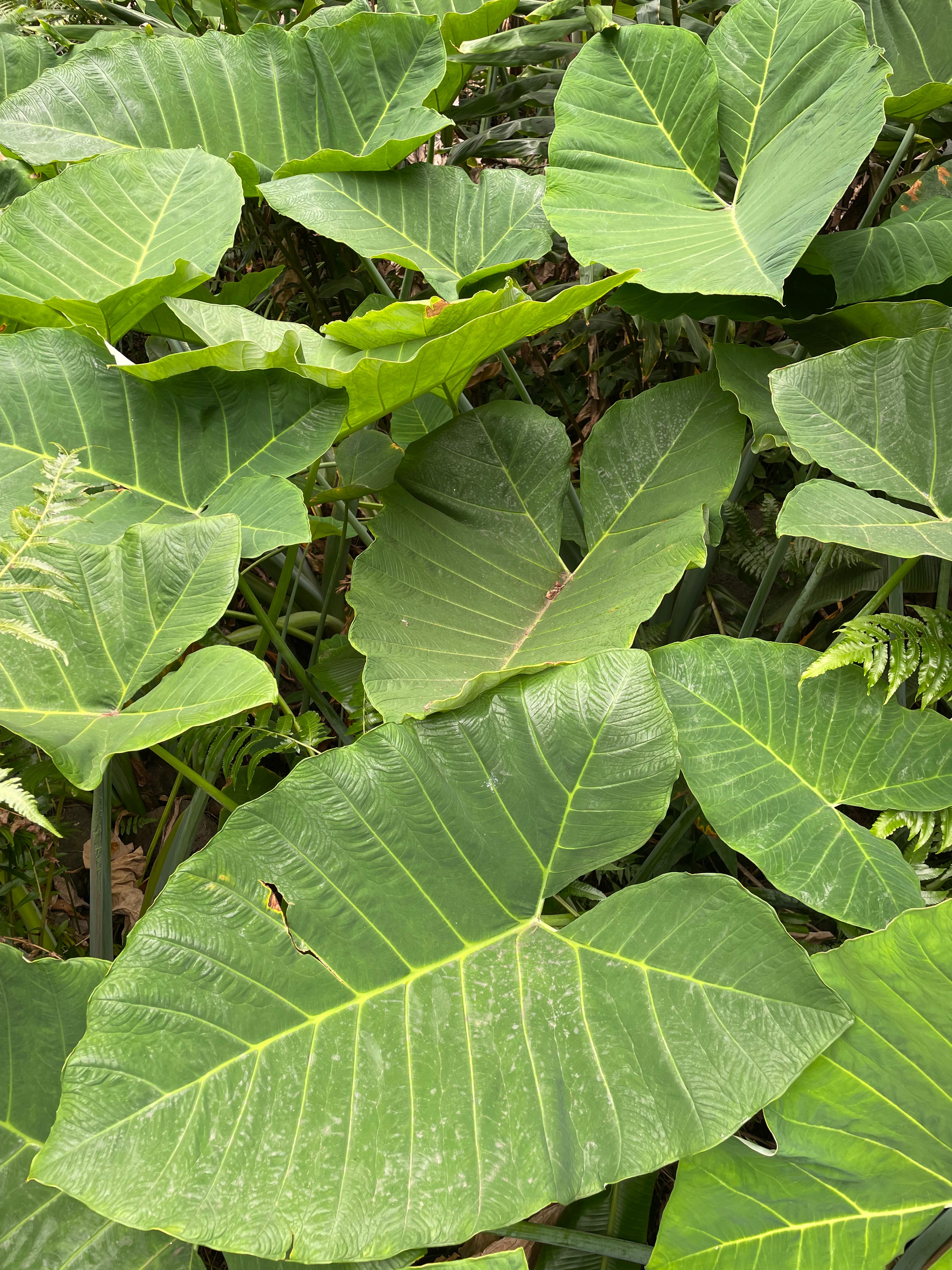
In honor of Asian American and Pacific Islander Heritage Month, I want to highlight taro. For Filipinos, taro is immediately associated with laing, pronounced LAH-ing, a dish made from dried taro leaves and stems, stewed in coconut milk. However this dish isn’t just Filipino, it’s found all throughout Oceania. When we think of Filipinos being connected to Asia, we think of rice, but when we think of Filipinos being connected to the Pacific Islands, we should think of taro.
A couple of weeks ago, I had the pleasure of dining with my Substack community—Ivana, Alicia, and Carrington. Ivana chose Purple Patch, a Filipino restaurant in DC I’ve been wanting to try. Without hesitation I ordered the laing, which had the option of coming with fried tofu. It did not disappoint.
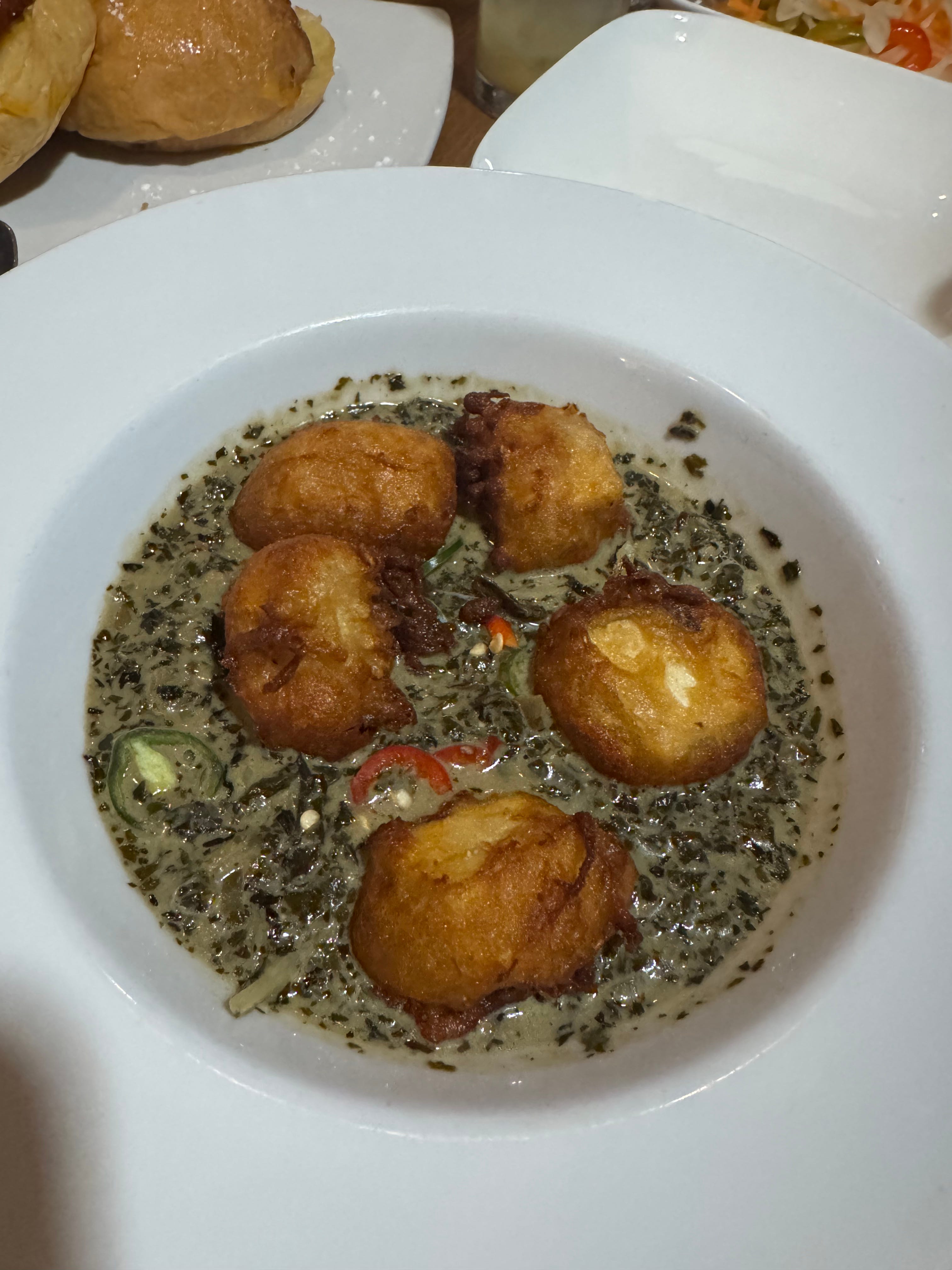
Every time I go to a Filipino restaurant, if there’s an option available, I order laing. I don’t do it just to see how it’s seasoned, I do it because of it’s ancestral significance.
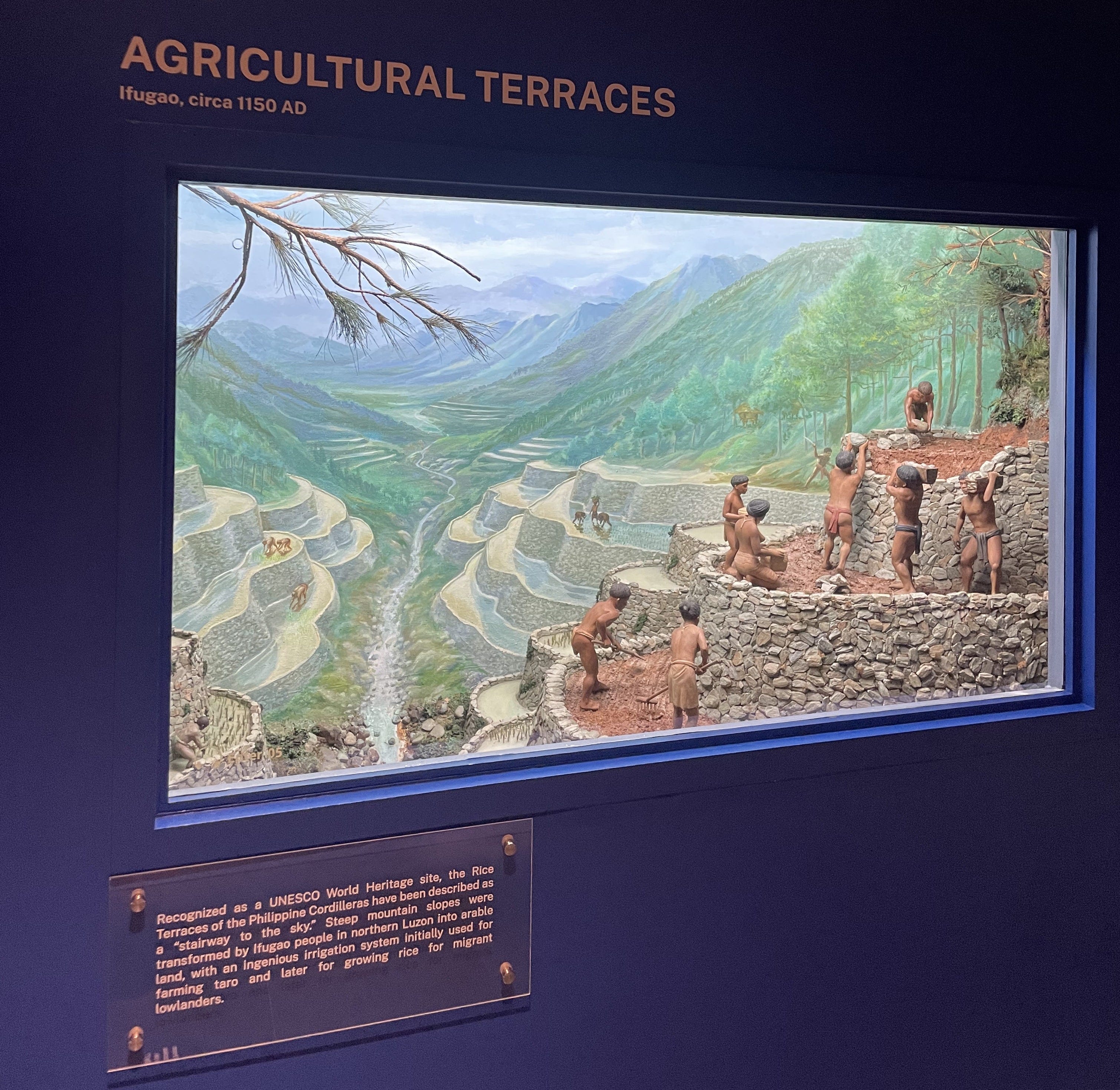
In 2024, our family visited the Philippines and spent most of our time in Palawan. Although we didn’t have the opportunity to explore Luzon, we spent substantial time at the Ayala museum while briefly in Manila. I’d heard of the famous Rice Terraces of the Philippine Cordilleras, but I was excited to see the historical timeline caption above that said, “Steep mountain slopes were transformed by Ifugao people in northern Luzon into arable land, with an ingenious irrigation system initially used for farming taro and later for growing rice for migrant lowlanders.”
Taro, with its sturdy stem and its glorious leaves, represent life in Oceania. Although Asian culture, especially those tied to the wild forests and old clearings, feel a connection to the ancient taro plant, its story has flourished on Pacific Islands including Hawai’i. I’ll never forget being entranced by taro in the ‘Īao Valley State Monument in Maui. Alongside a view of the erosional feature Kuka’emoku, taro grew in the valley, surrounding ancient rocks next to big streams and boulders where Native Hawaiians still bathe and enjoy each other’s company. Kalo (taro) is the origin of poi, the reddish purple pounding of boiled taro corms which formed the staple carbohydrate of the Hawaiian diet. Before Westerners arrived with invasive plants, kalo once covered the entire floor of the ‘Īao Valley.
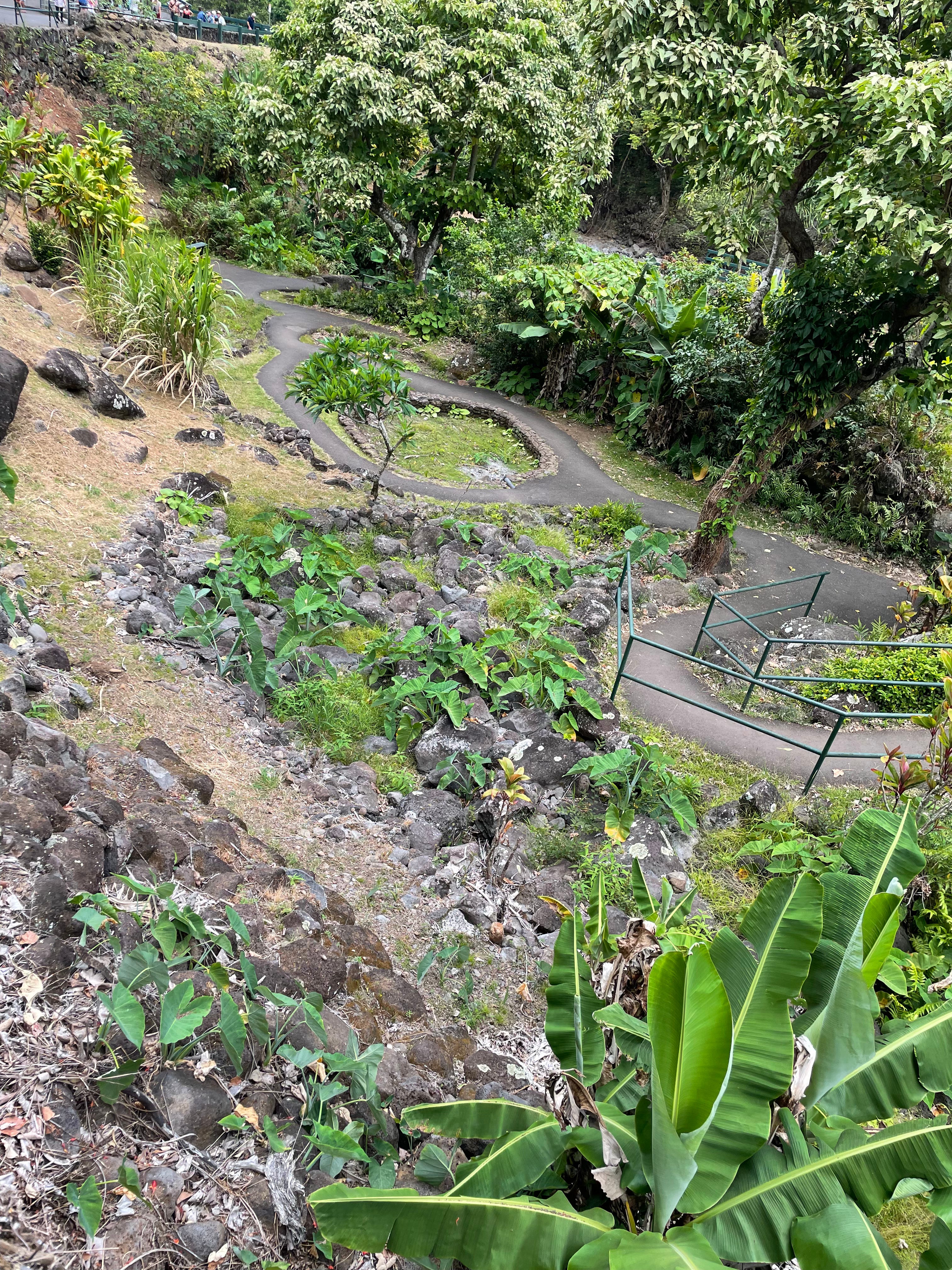
Through the knowledge of the ‘Īao Valley, we see taro as emblematic of Native Hawaiian culture. There have been 342 varieties of kalo recorded in Hawai’i alone, however this encompasses two distinct varietal lines. Researchers have found that both lines were carried “from Mainland Asia throughout the Ryukus to Japan and China as well as southward through Timor in present-day Indonesia and on to New Caledonia. Only one of the pair was established in northern Melanesia, including New Guinea, and passed on from there to Polynesia.”
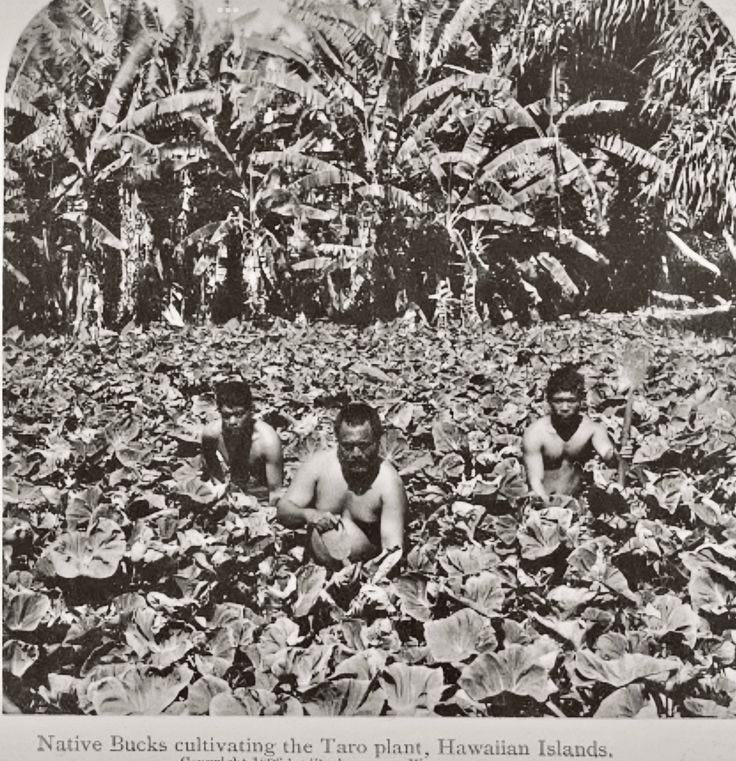
This species found in the valleys of Hawai’i that grows along the streams, stagnant pools and swamy areas near lowland forests can also be found in the Philippines and is called Palawan (giant swamp taro). The leaf blades, petioles, corms, and stolons of taro are widely used in popular forms of cooking in the Philippines. In some provinces in the Visayas, the corms of biga (giant taro) are boiled and prepared as local cakes called binagol. These plant parts are usually consumed as vegetables in both fresh and dried forms. In the Bicol and Visayan provinces, the corms are boiled and eaten like potatoes or prepared as desserts.
Taro is also known for its medicinal properties due to the rich high-quality vitamins and minerals found in its corms. In the Philippines, the corms and leaves are used to relieve joint pains. In Hawai’i, the color of the taro plant was an important indicator of which to choose for medicinal purposes. The dark (hiwa) varieties were preferred for medical offerings and the more perfectly formed the plant, the more powerful it could be.
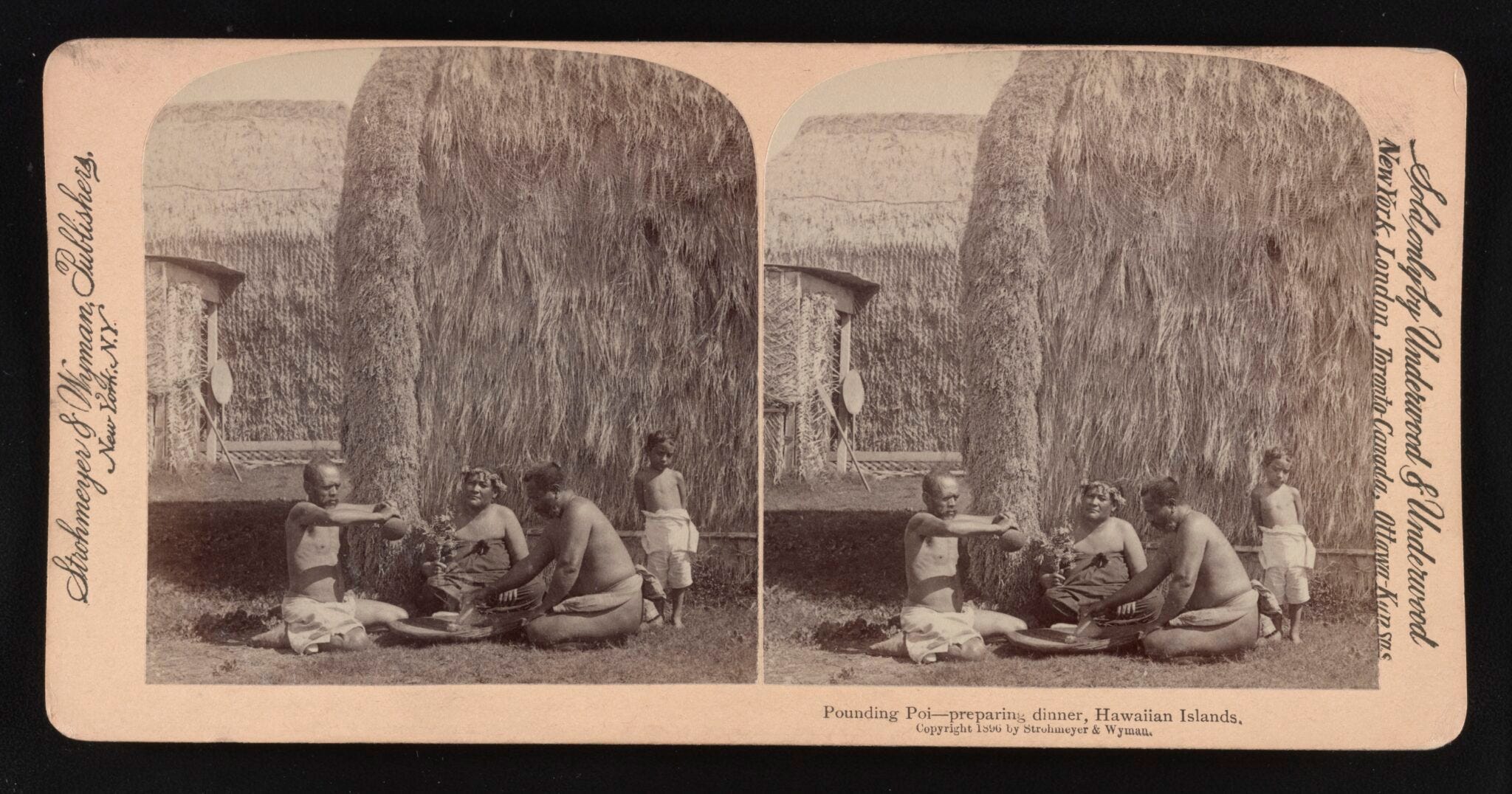
I write more about my time and interests in Hawai’i and the Philippines in ISLANDS, my first zine now available for pre-order. I think it’s important that we take this month seriously to talk about ingredients, especially natural ingredients, as part of shared cultural heritage. Perhaps more than any other time of the year, May could be the right time to try to make laing or poi, or at the very least find a restaurant that offers them. I’m sure you will be delighted.
x Vanessa
Love how you threaded everything together. Beautiful.
Very interesting. I must admit I had no knowledge of this food connection.