

Baskets on the Table
How to connect plants with culture.

I normally would have sent this to you on Monday, but instead I was spending time with my AREAA friends. AREAA, the Asian Real Estate Association of America, is what allowed me and my family to move to the DC metro. It’s what made me become very serious about Asian American and Pacific Islander representation, storytelling and policy. All that to say, I was out on Mother’s Day night with two previous committee chairs I previously had the pleasure of working with, and the past luxury chair asked me what I truly cared about right now (where I saw my purpose), and I said beauty.
After leaving AREAA full time in 2023, the last three years have been life-defining, as I’ve explored all the ways I can bridge my varied interests surrounding cooking, style and culture. I’m beyond thankful to the Substack community and you, for supporting my writing development. Although I’ve placed myself in the design genre here on Substack, I am insistent on sharing the beauty of Asian American and Pacific Islander cultures. I see that beauty through natural materials, plant life, the ocean, and indigenous storytelling.
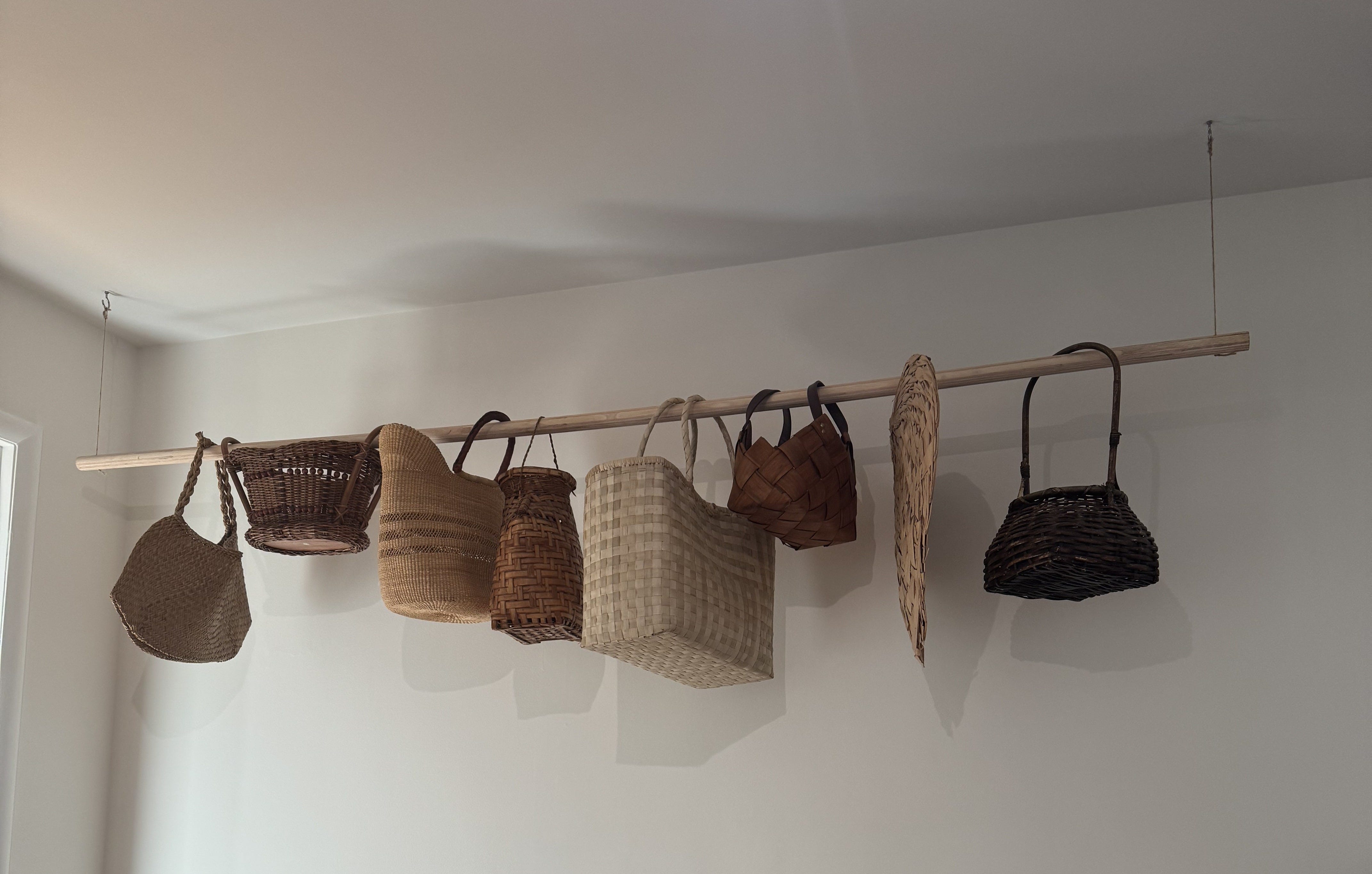
Last week, I shared a photo of the dowel Justin hung up in my workspace. It’s the first time I’ve been able to see my baskets together as a collection. A couple of these baskets I’ve found myself, a few of them have been gifts, and one is a very special fishing basket from the Philippines. I just used one of them recently for an Easter arrangement. Another I sometimes use as a purse. Seeing this collection everyday brings me infinite joy. Apparently, many others connected with the image too, when I shared it last week.


Mother’s Day brought even more joy when I received a mountain of a second hand collection, as well as a very special book I’ve been thinking about for ages. The first time I read about this book and the Time-Life Food of the World catalog was in Feast for the Eyes, an art book I found at the MoCa in Los Angeles almost a decade ago. The book showcases food photography by decade, and of course in my favorite decade, the 1970s, I discovered this:
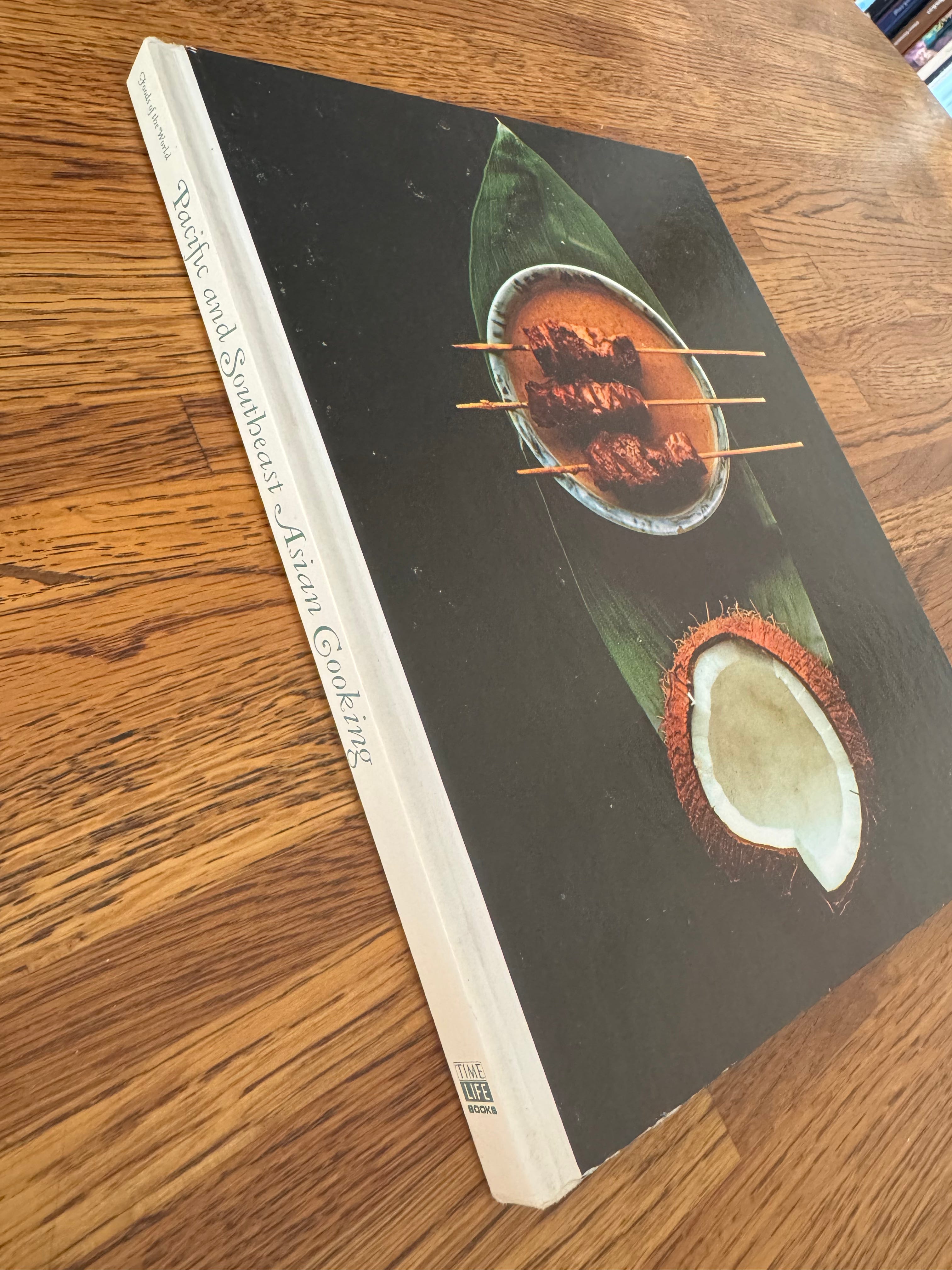
“Foods of the World was a series of twenty-seven cookbooks that was published from 1968 to 1978 by Time-Life, the book-marketing division of the popular Time and Life magazines….The covers were immediately recognizable by nationality, relying on the same kinds of pictorial codes and signifiers of cultural myth and national identity that Roland Barthes discusses in his 1964 essay, “Rhetoric of the Image,” about reading “Italianness” in a pasta advertisement: there’s glassblower’s herring for Scandinavia, a gingerbread house for Germany, and exotic coconut and skewered chicken for the Pacific and Southeast Asia…..Similar to National Geographic magazines, the Foods of the World books can be seen as travelogues, albeit narrated through food…Definitely a product of their time, the books are flawed and clichéd, full of sweeping generalizations—but as photographic documents, they are valuable keys to the cultural attitudes, including American’s expanding desire to see the world.
Now, for the good stuff—baskets. I’m going to share some photography found in the book.
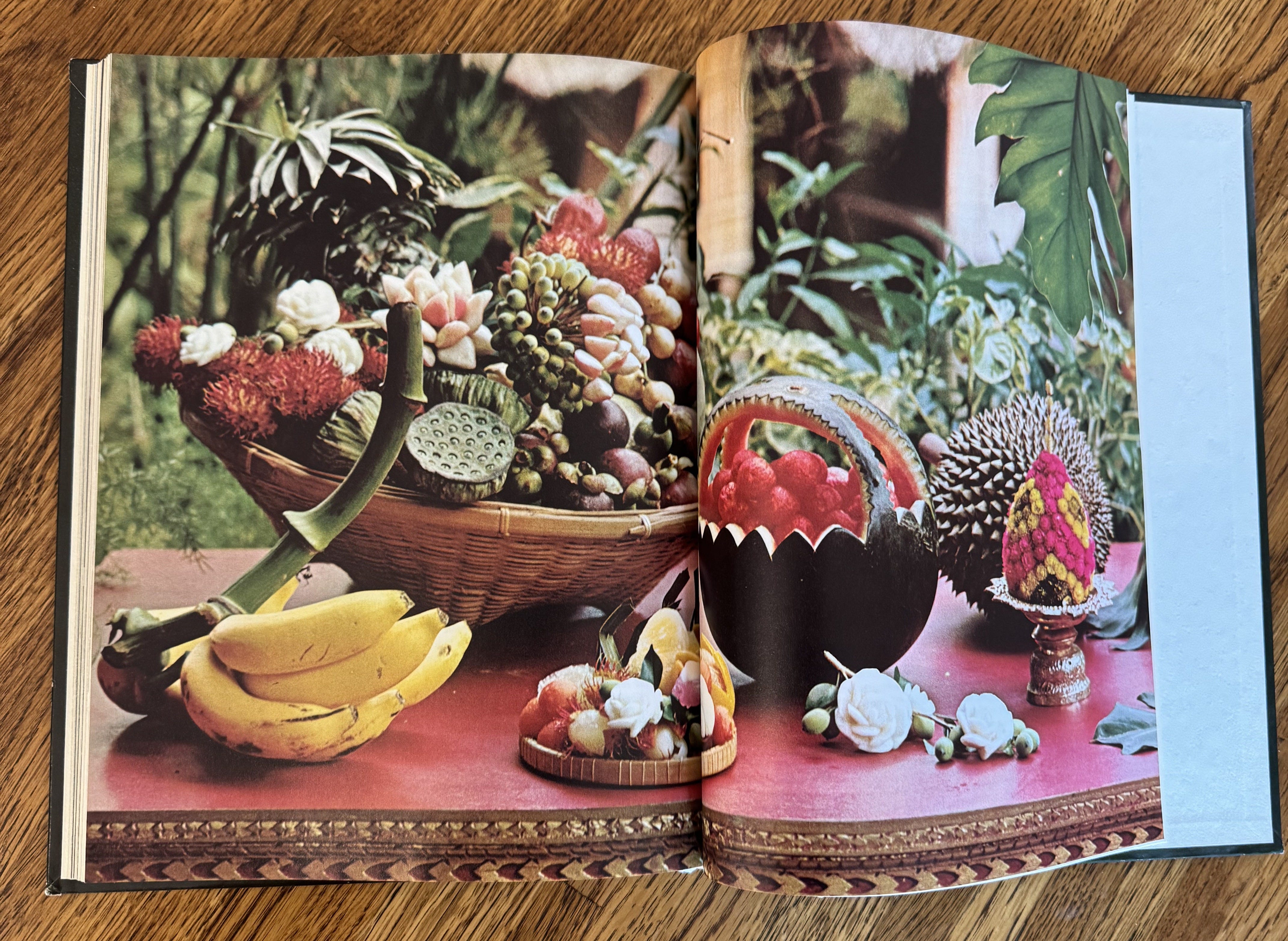
On the table, a basket of fruit and flowers next to a basket carved from melon.
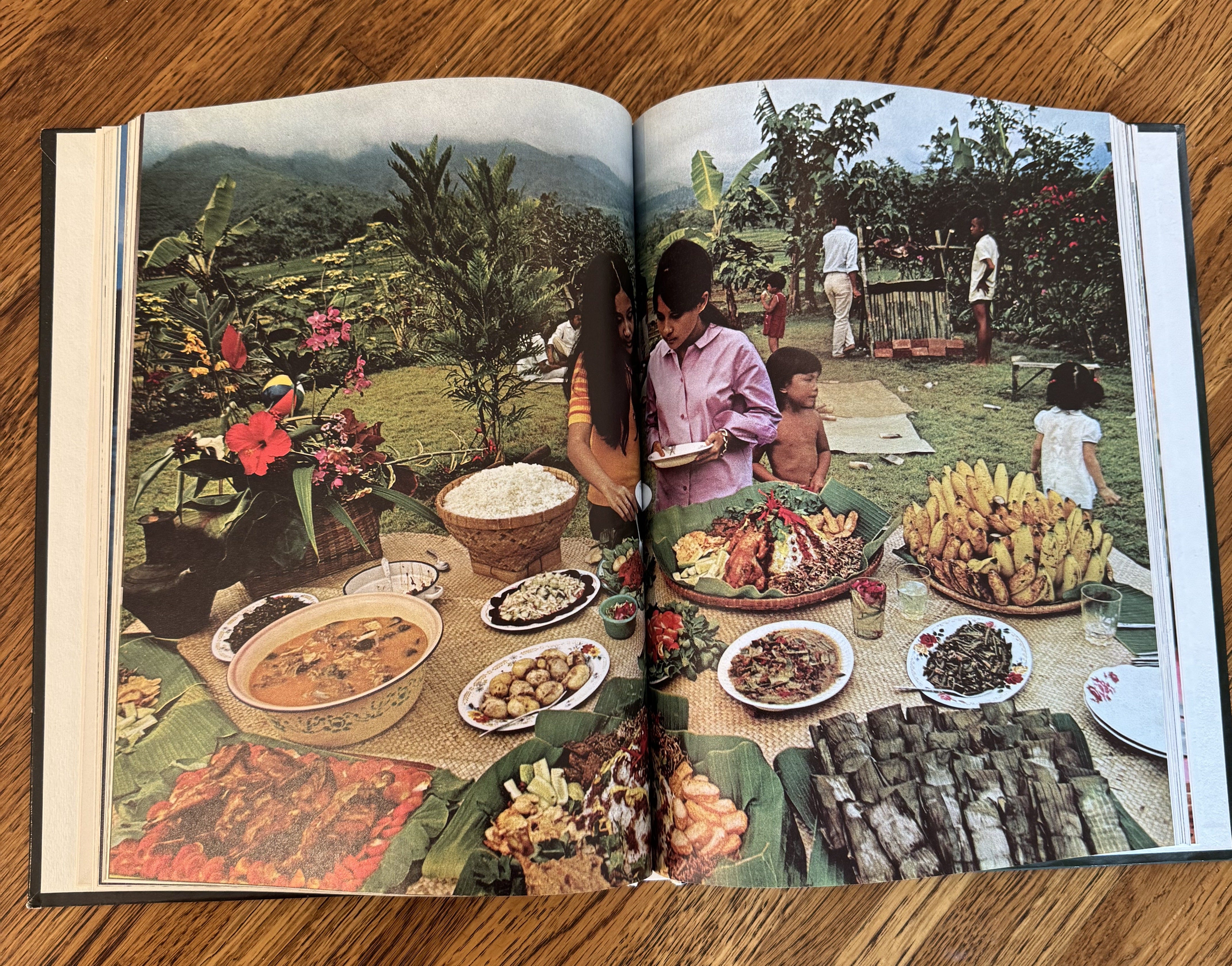
On the table, a floral arrangement in a basket, a basket of rice on the table, and woven trays which for me, are in the basket family.
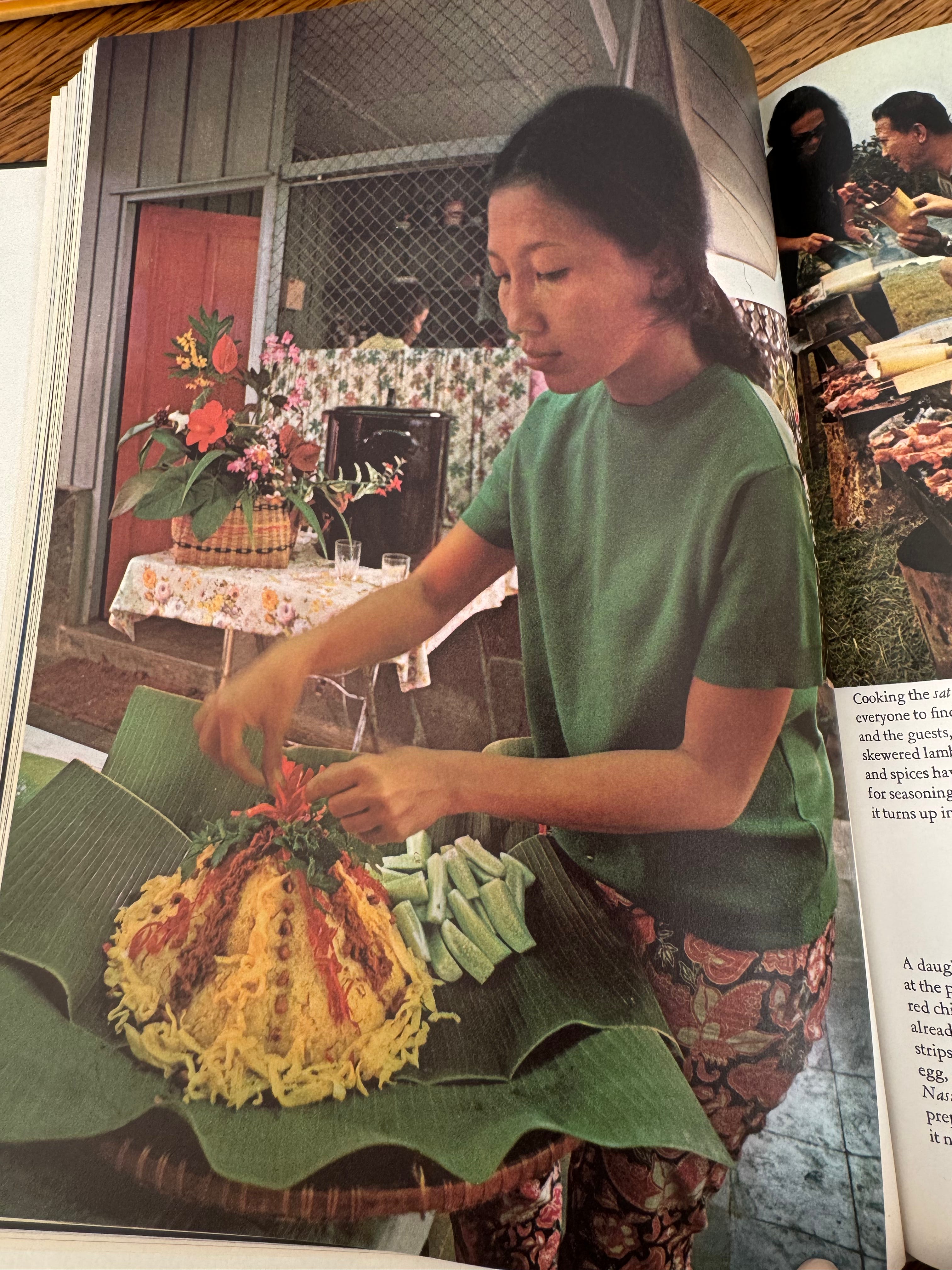
Another basket floral arrangement in the background, and another tray lined with banana leaves. She’s finishing a dish called nasi tumpeng, which has “been decorated and seasoned with vertical strips of shredded beef, red chilies, a row of cooked egg, and, in the center, a row of unshelled peanuts.”
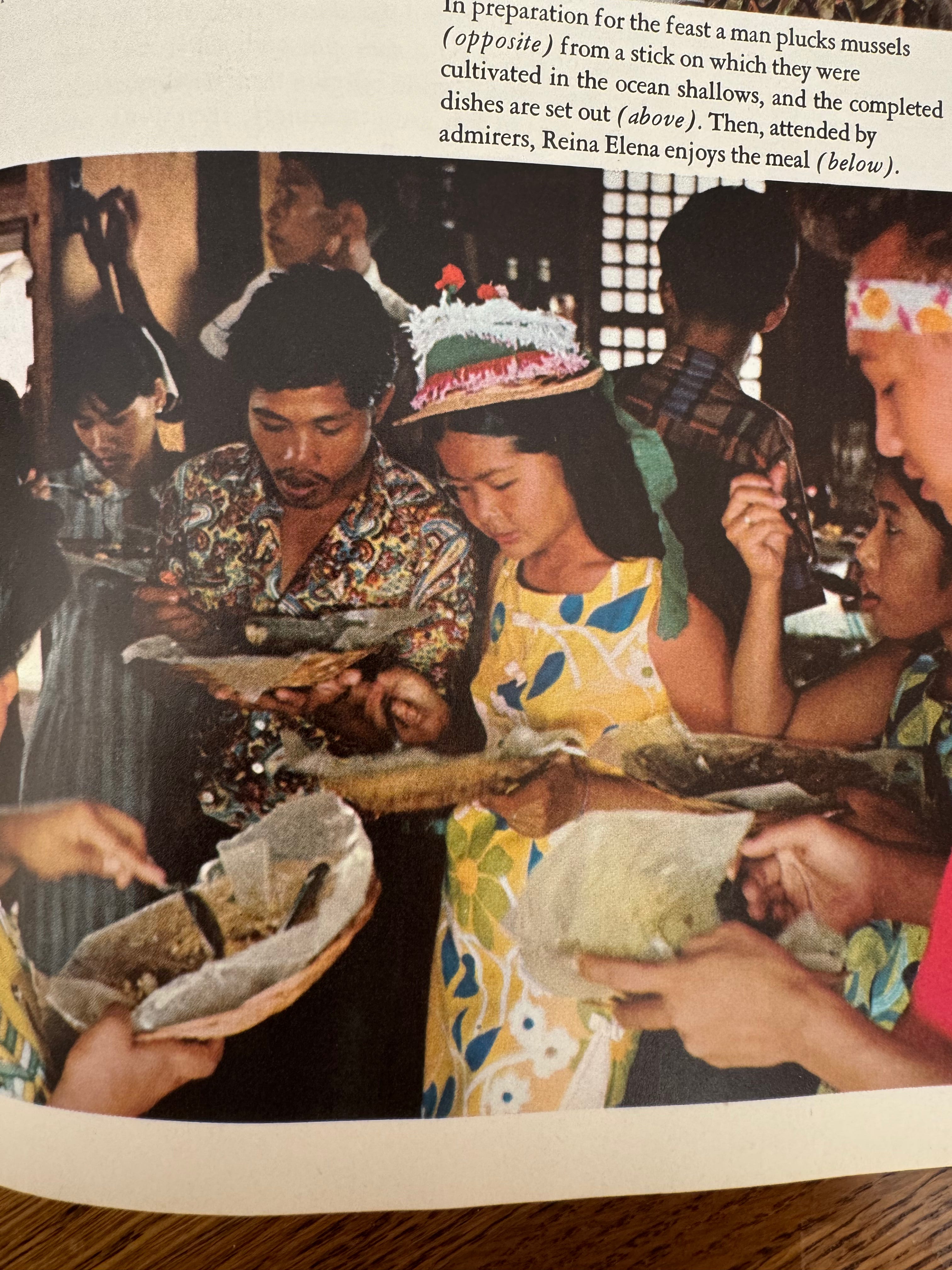
A personal favorite image shot in the Philippines. They are enjoying food together while standing up. Instead of a plastic plate, they eat from parchment paper covering a woven tray.
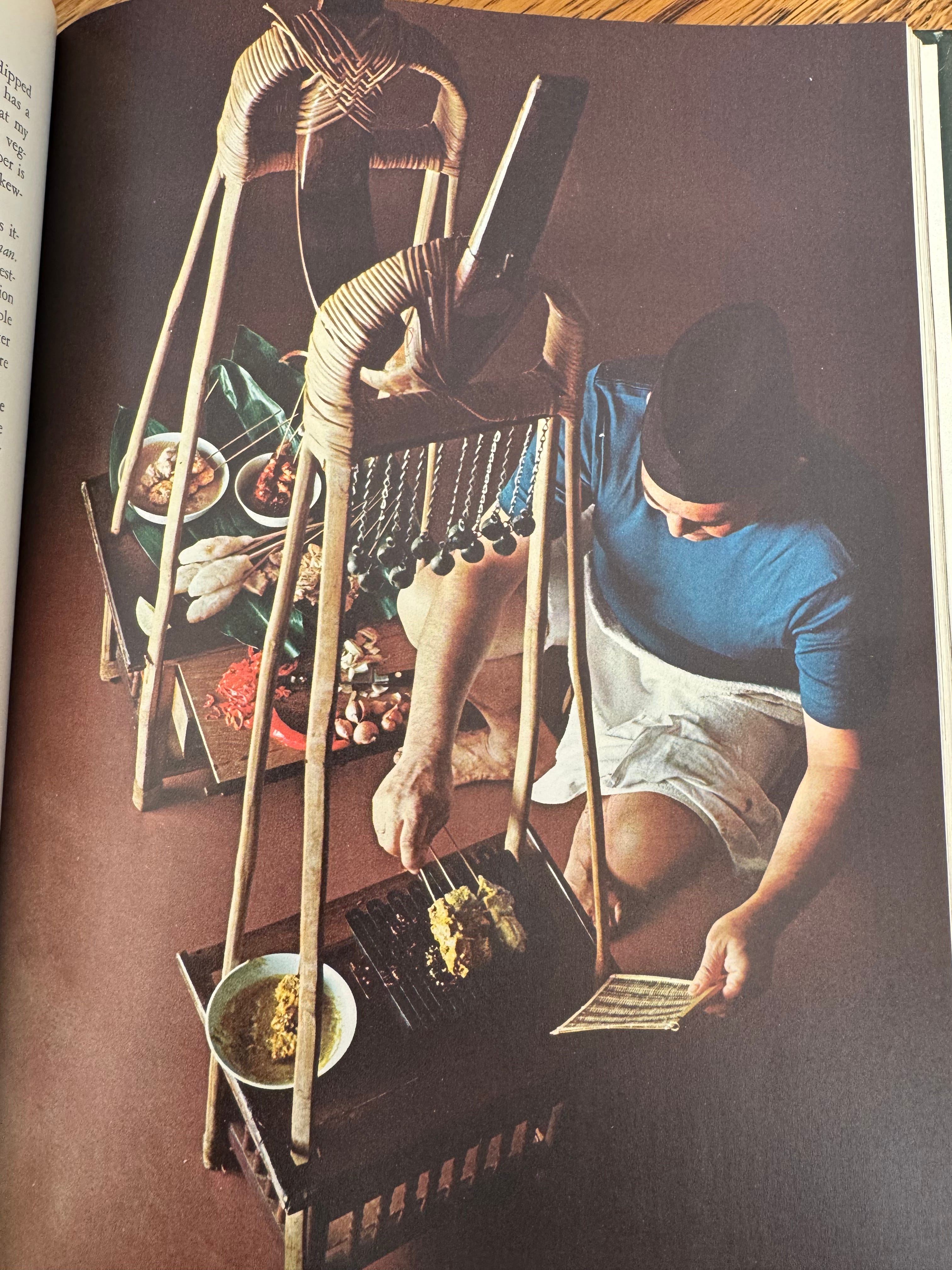
This one kind of blew my mind. It’s an example of a saté vendor. “Fanning the coals in the broiler, he grills saté made of beef chunks; the bowl contains curry sauce. The far tray holds saté of fish, pork, chicken and lamb, with shallots and red chilies to be used for seasoning. The vendor’s equipment called a pikulan, is portable. He carries the yoke on his shoulder, and the bells clang together to announce him.”
I’m going to call the pikulan a basket because it has all of the characteristics—the handle, the bamboo, and the style. I also love the idea of thinking about baskets in non-traditional ways. How can we integrate their beauty in a food setting? I hope these ideas inspire you in the same way they’ve inspired me.
x Vanessa