

A Sugarcane-Inspired Kamayan

Hawai’i has been on my mind lately. During the FANHS (Filipino American National Historical Society) conference on July 25, I met a few Filipino Hawaiians and connected over the beauty and importance of plant life. I’m really interested in the intersection of culture and style and have found so much inspiration in Polynesia, especially in Hawai’i, where there’s a large Filipino population. A few days after the conference, we invited a few neighbors over for dinner. I knew immediately I wanted to prepare a kamayan, however it wasn’t until I saw sugarcane at H Mart that the menu came together.
Shared Austronesian Roots + Plantation Labor History
Sugarcane is identified as one of the original major Austronesian crops since at least 3500 BCE. It’s believed to have reached the Philippines from Taiwan around 2200 BCE. Eventually Polynesian settlers would bring sugarcane (kō) to Hawai’i around 600 CE.
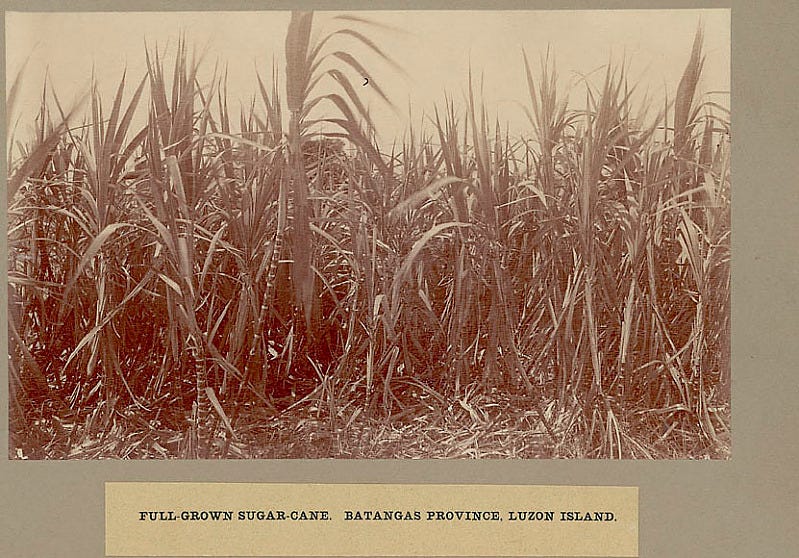
Filipino sugar plantation workers in Hawaiʻi first arrived in 1906, lasting until 1946. They were brought by the HSPA (Hawaii Sugar Planter’s Association) to work on the sugar plantations that were expanding on every island and in every area where land and water were available. At first, there were 15 of them who became known as sakadas. They were recruited from three main regions of the Philippines and included Visayans, Ilocanos and Tagalogs.
By 1932, Filipinos became the backbone of plantation labor and made up 70% of the workforce, the remaining laborers coming from Japan and China. Although more than half would return to the Philippines, the rest who stayed became part of the multi-ethnic community that makes Hawai’i so special.
Ikebana-inspired lei making


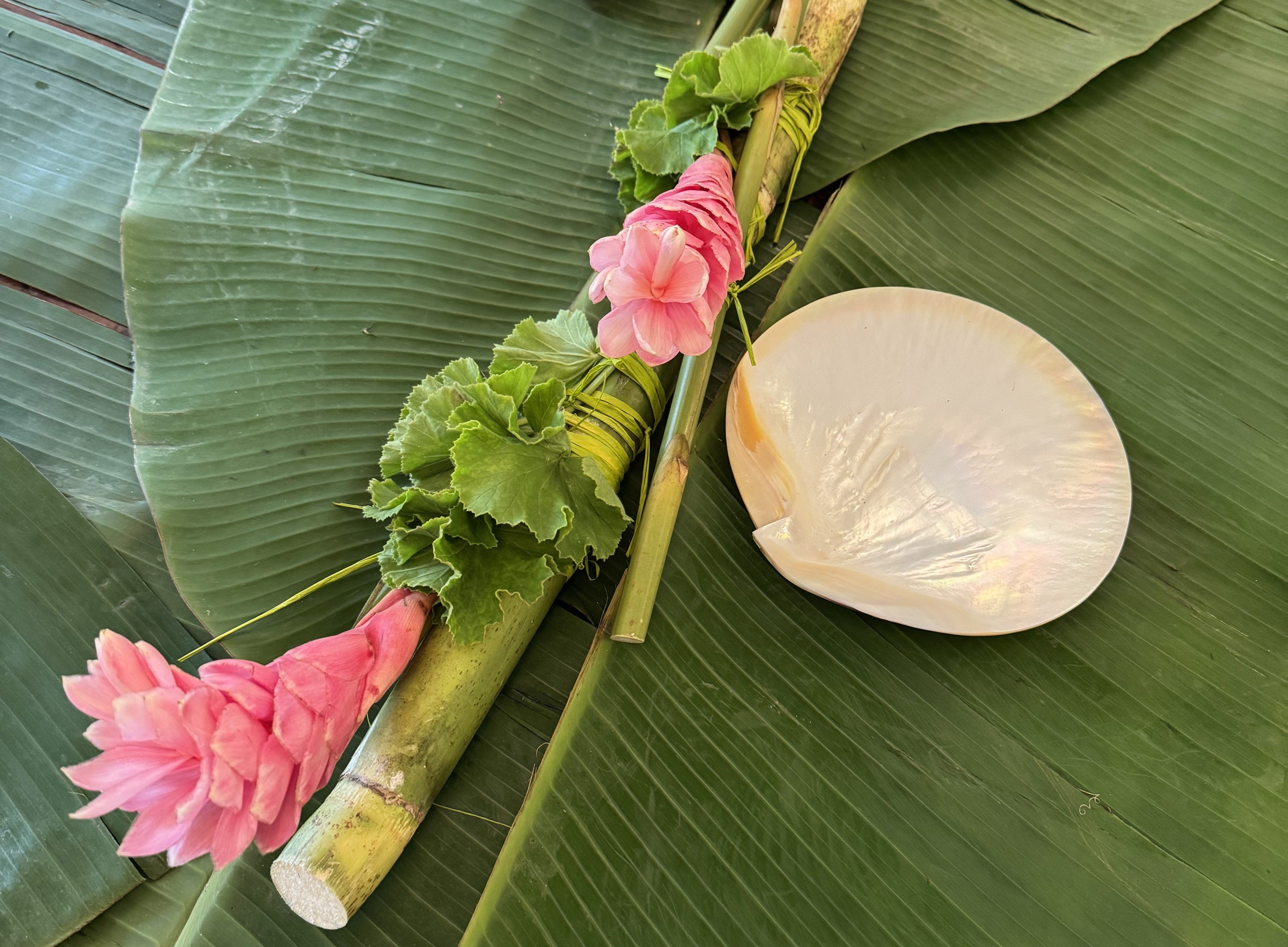
I found sugarcane while shopping for ingredients at H Mart and that’s when I started thinking seriously about a centerpiece for the kamayan. Typically the food serves as the decoration, but I like the idea of incorporating flowers through the food. I study and practice ikebana (informally) because of how spacing considerations allow plant life to shine. Whereas a traditional arrangement is about grouping and sometimes symmetry, ikebana allows fewer stems to create individual shapes by taking up more space. Because I wanted the arrangement to be flat, I decided to use a lei technique I learned from making haku lei. With a raffia color that matched the sugarcane, I tied pink ginger, and to soften the harshness of the sugarcane and ginger stem, I used geranium leaves.


What was served
The menu was very simple and very Filipino Hawaiian. Here is what I served:
Lomi salmon (on the shell plate found in the Philippines)
Yellow watermelon found at the local farm stand
Ripe mangos
White rice
Huli chicken
Fresh corn from the local farm stand
Roasted kabocha squash
Garlic shrimp
Adobong sitaw (I was pleasantly surprised to find the yardlong beans at the local farm stand)
For dessert, I served Magnolia avocado ice cream.
I hope this menu might inspire you to incorporate more Hawaiian flavors and beauty in your next home-cooked meal.
x Vanessa